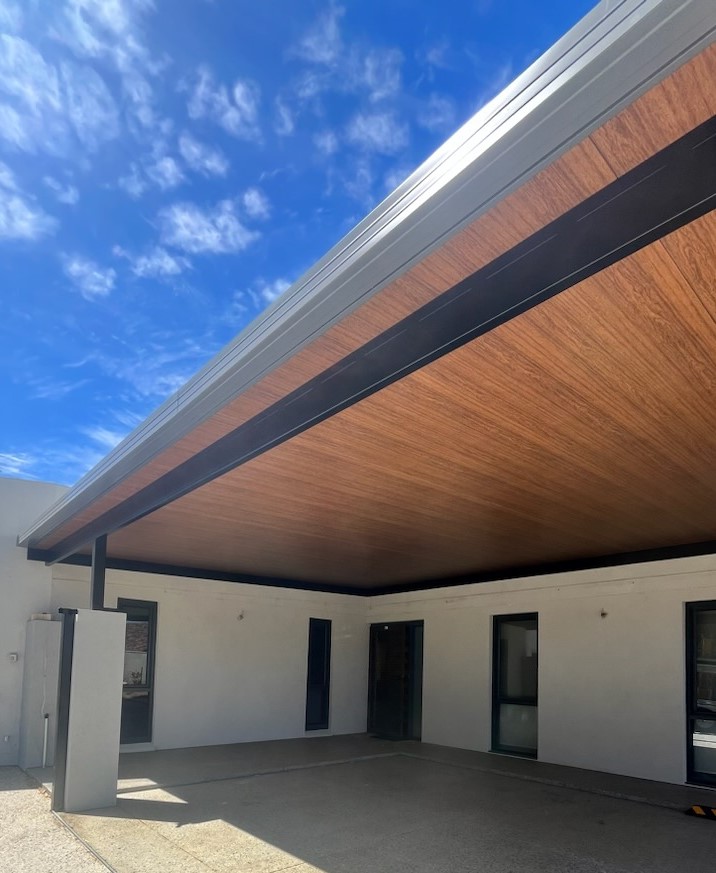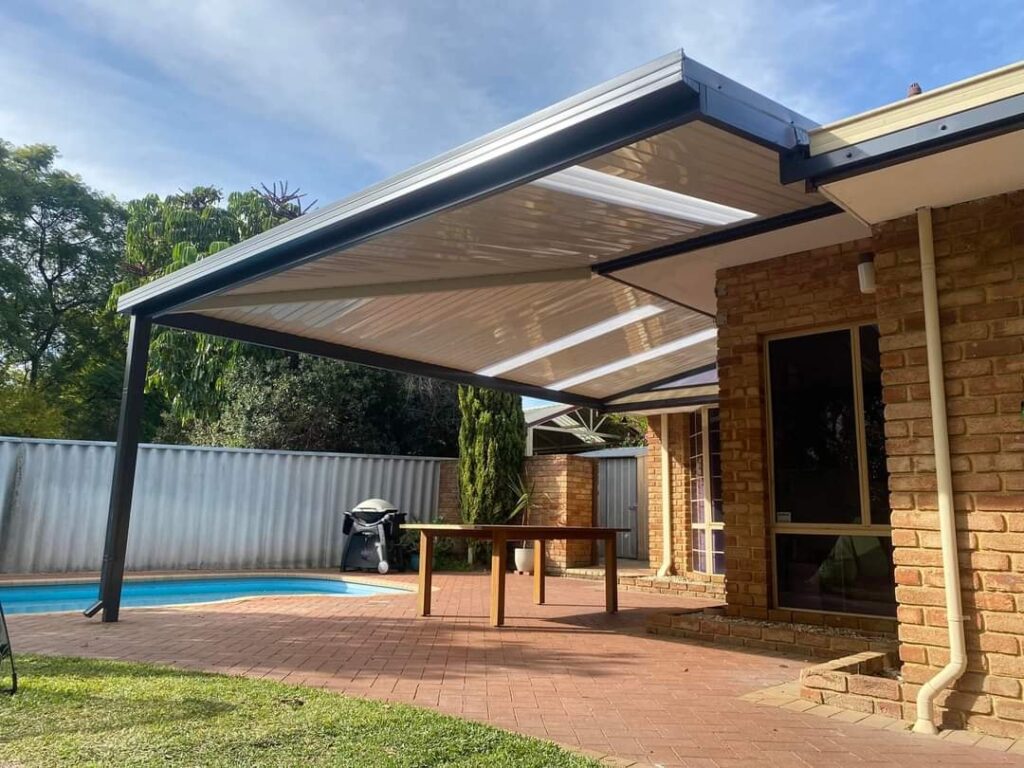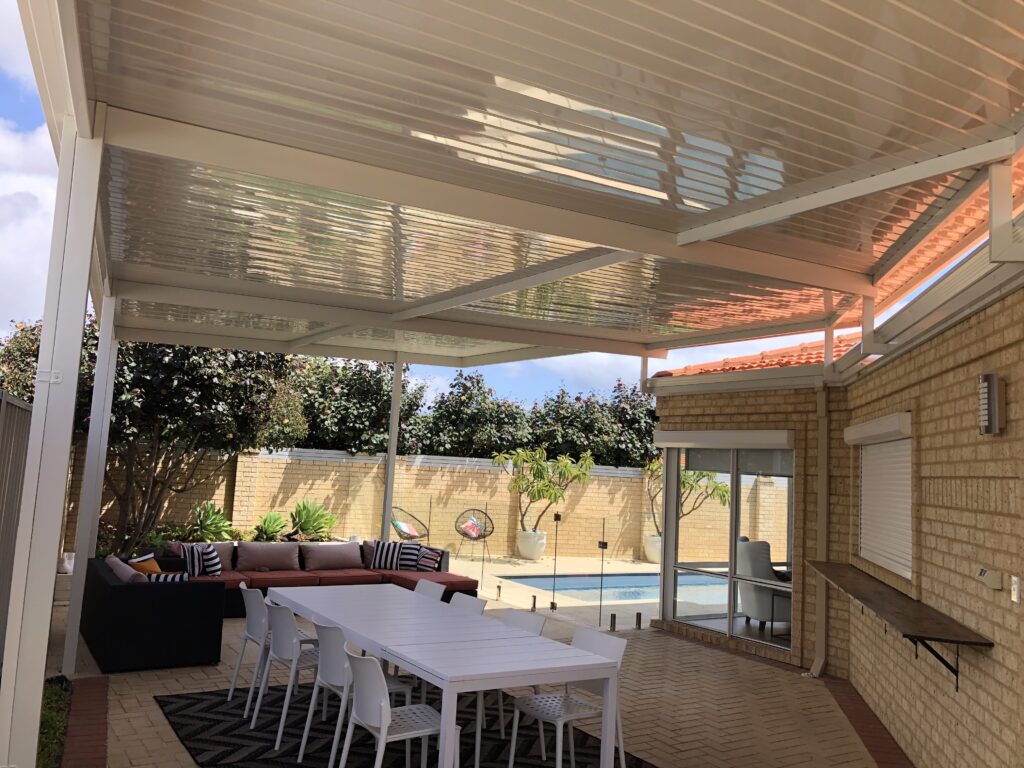

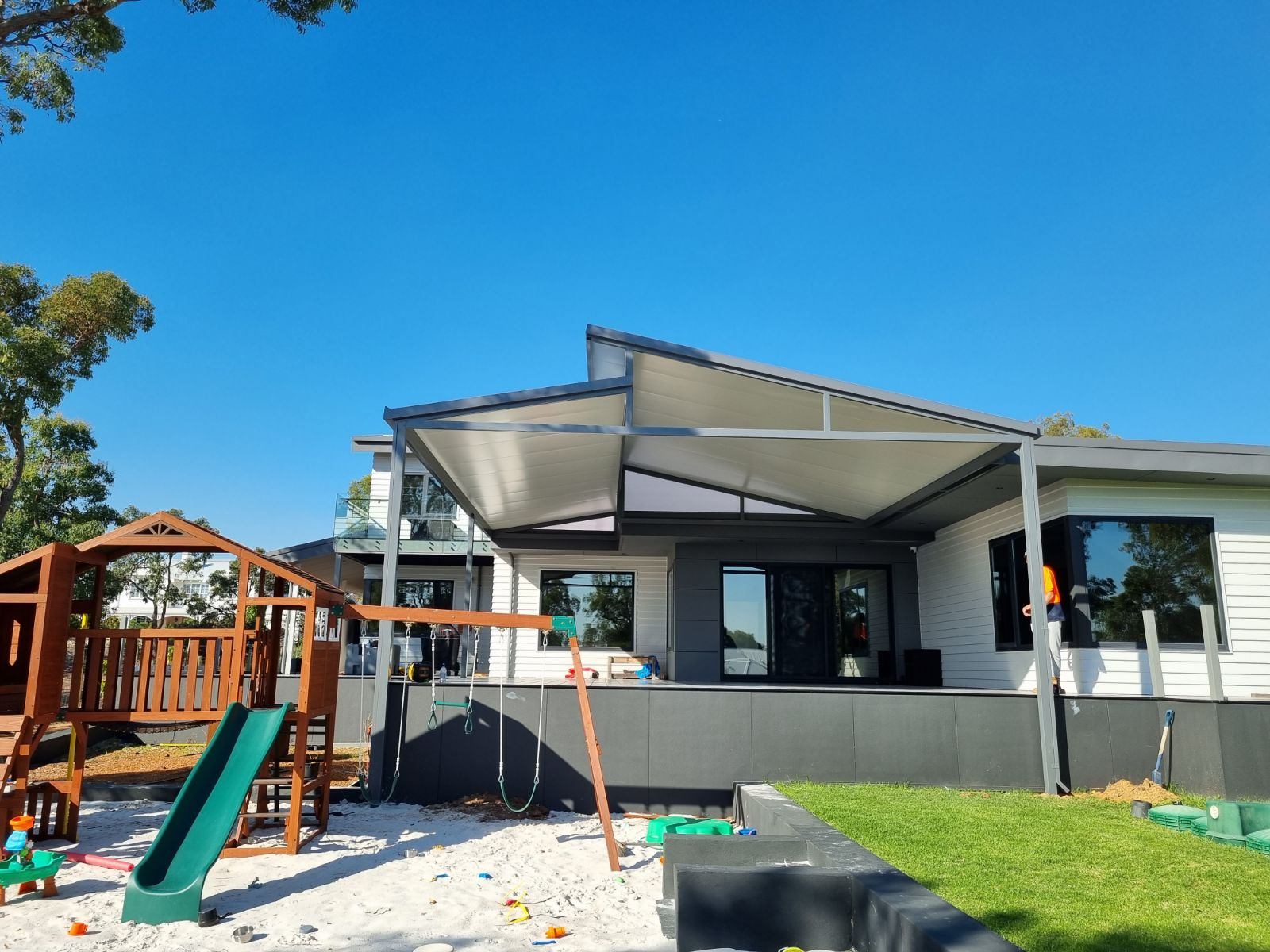
Roof material is the decision most people get stuck on, and it is the one that changes how the finished space feels more than anything else. The design decides the shape. The material decides whether you use the patio in February.
One Stop Patio Shop supplies and installs all three across the Perth metro area. This page sets out what each one actually does in Perth conditions, in plain language rather than product names.
The short version
Most Perth volume builders do not include a patio as a standard inclusion, so it becomes an owner-arranged addition after settlement. Newer estates are also where planning approval and design guidelines are most likely to apply, which is worth checking before you sign.
Who Builds Colorbond Patios in Perth?
Colorbond is the standard we work in and the material on most of the patios we install. Flatdek, Trimdek and corrugated are all Colorbond profiles, and all the coil comes from BlueScope.
It is specified because it holds its colour, handles the sun, wind and coastal exposure that Perth throws at it year after year, and comes pre-painted across the full colour range so the roof can be
matched to the house or deliberately contrasted.
The trade-off to understand is heat. Colorbond blocks the sun completely, but the sheeting warms through the afternoon and radiates that heat downward. On a shaded or south facing patio you will not notice. On a west facing patio in summer you will.
Flatdek, Trimdek and Corrugated
These are profiles, not different materials. All four are Colorbond and all four perform the same way thermally. The difference is the look from below and the way the ribs read across the span.
Flatdek gives the flattest, most contemporary line and is the profile we fit most often. Trimdek have a more pronounced rib. Corrugated is the traditional profile and suits a heritage or federation style home better than a flat rib does. Choosing between them is an aesthetic decision, which is why the showroom is worth a visit.
Who Installs Insulated Patio Panels in Perth?
Solarspan is the insulated option, built on a Bondor panel with a Colorbond top-skin. It does three things a single skin roof cannot.
- It stops radiant heat. The insulated core sits between the hot top-skin and the space underneath, so you get genuine shade rather than warm shade. On a west facing patio that is the single biggest comfort decision available to you.
- It dampens rain noise. The same core absorbs sound, so a heavy Perth downpour is a muted rumble rather than something you talk over.
- It finishes as a ceiling. The underside is smooth Colorbond, so there is no exposed sheeting and no separate lining cost if you want a clean finish overhead.
Polycarbonate: When Light Matters More Than Heat
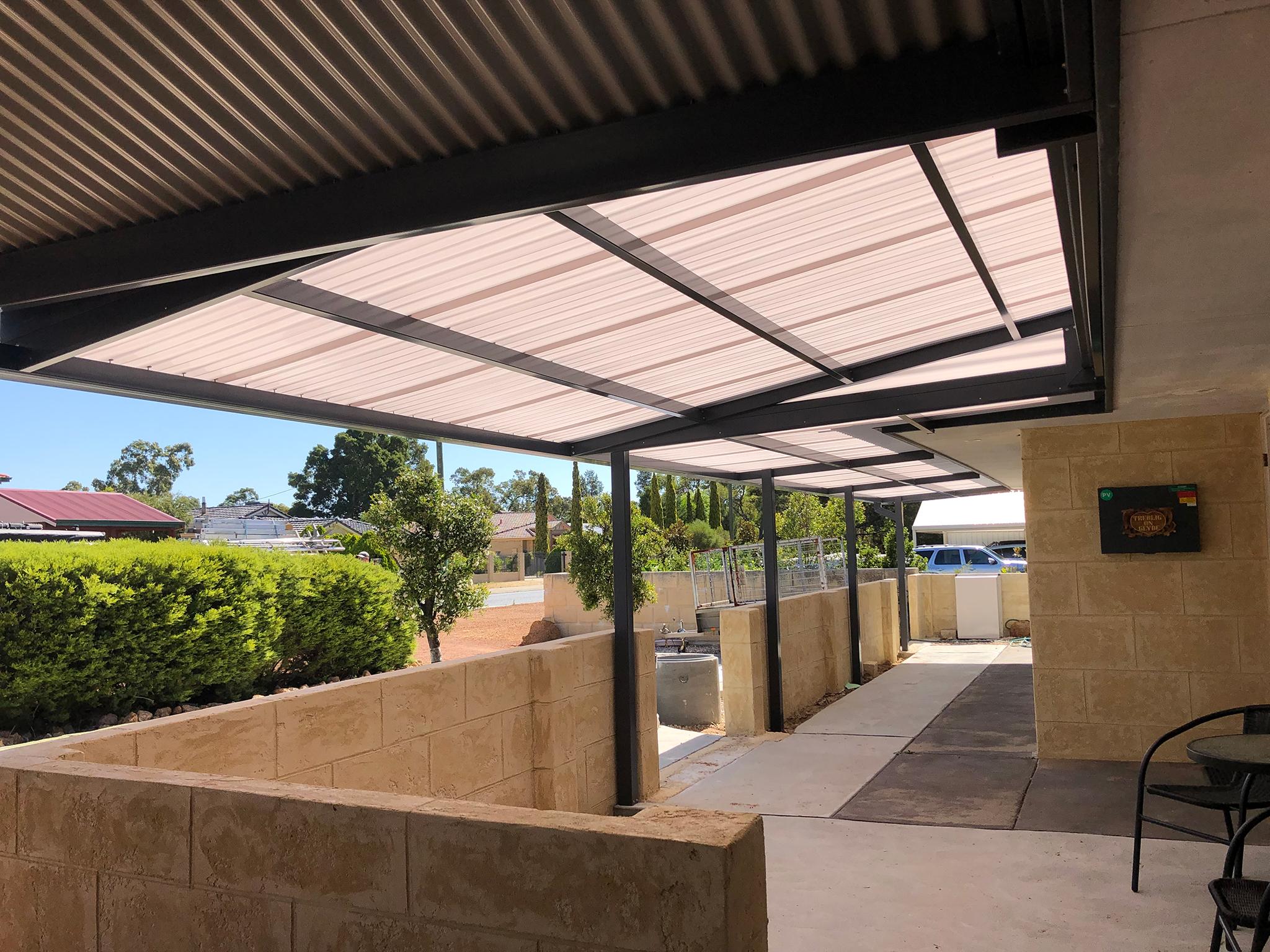
Polycarbonate lets light through. That is the entire case for it and it is a strong one in the right situation.
The situation is a patio that would otherwise darken an indoor room behind it. If your kitchen or dining area currently gets good natural light and a solid roof would take that away, polycarbonate keeps it. The cost is heat control, because light coming through means warmth coming through.
A common middle path is a solid Colorbond or Solarspan roof with a polycarbonate strip over the section closest to the house. You keep the indoor light without heating the whole patio.
Which One for Your Block
Orientation first. West or north west facing and used through summer points to Solarspan. South facing, shaded or used mainly outside the hottest months points to Colorbond. An adjoining room that relies on natural light points to polycarbonate or a polycarbonate infill.
Budget second. Colorbond sits in the middle and is the sensible default. Polycarbonate is the lowest upfront cost of the three. Solarspan costs the most per square metre and earns it back in comfort across hundreds of summer afternoons over the life of the structure.
We will tell you which we would put on your block and why, at the free on-site quote. There is a fuller comparison in our guide to Solarspan versus Colorbond versus polycarbonate patio roofing.
Book a Free On-Site Quote
Call 08 6500 0614, email sales@onestoppatioshop.com.au or request a quote online. Our office and showroom at 1061 Thomas Road, Anketell WA 6167 are open Monday to Friday 8am to 4:30pm, and Saturday by appointment.
Frequently Asked Questions
It depends on orientation. Colorbond is the durable all rounder and suits most patios. Solarspan is insulated and makes the biggest difference to heat on a west facing space. Polycarbonate lets light through where the area would otherwise sit dark.
Flatdek is a Colorbond profile, not a separate material. Flatdek, Trimdek and corrugated are all Colorbond. They perform the same thermally and differ in how the rib reads from below.
Solarspan. A single skin Colorbond roof blocks the sun but radiates absorbed heat downward. The insulated core in Solarspan stops most of that transfer, so the space underneath stays meaningfully cooler.
Solarspan, because the insulated core absorbs sound. Polycarbonate is the loudest of the three, and single skin Colorbond sits between them.
Yes, and it is a sensible option where an indoor room behind the patio relies on natural light. A solid Colorbond or Solarspan roof with a polycarbonate strip nearest the house keeps the light without heating the whole space.
Powdercoated, epoxy-primed, 100% Australian Orrcon steel, with Colorbond roof sheeting, gutters and flashings. We build in steel only.
All the Colorbond coil used in our roof sheeting comes from BlueScope, and the insulated Solarspan panels come from Bondor. Both are Australian made.