
The roof is the single biggest material decision in any patio build. It sets the look of the space, decides how the patio feels in summer and winter, drives a meaningful share of the cost, and lives over your head for the next twenty or thirty years. Getting it right early is worth more than almost any other decision in the project.
We supply and install three patio roofing materials across Perth: polycarbonate, Colorbond steel, and Solarspan insulated panels. Colorbond comes in a few profiles, and the flat profile most people know as Flatdek is the one we fit most often. Each material has a place, and each is the wrong choice for some applications. This guide walks through the practical differences in plain language, so you can match the material to the patio you actually want.
In a hurry? Here is the short version.
Polycarbonate is cheapest and lets in light. Colorbond is the workhorse with a clean modern look. Solarspan is the premium insulated option that turns a patio into a year-round outdoor room.
The Three Roof Materials at a Glance
Polycarbonate is the budget-friendly translucent option. It lets a lot of light through, costs the least to install, and suits patios where light is the priority. It does not insulate, and it is loud in rain. It is the right pick when you want maximum light transmission and minimum upfront cost.
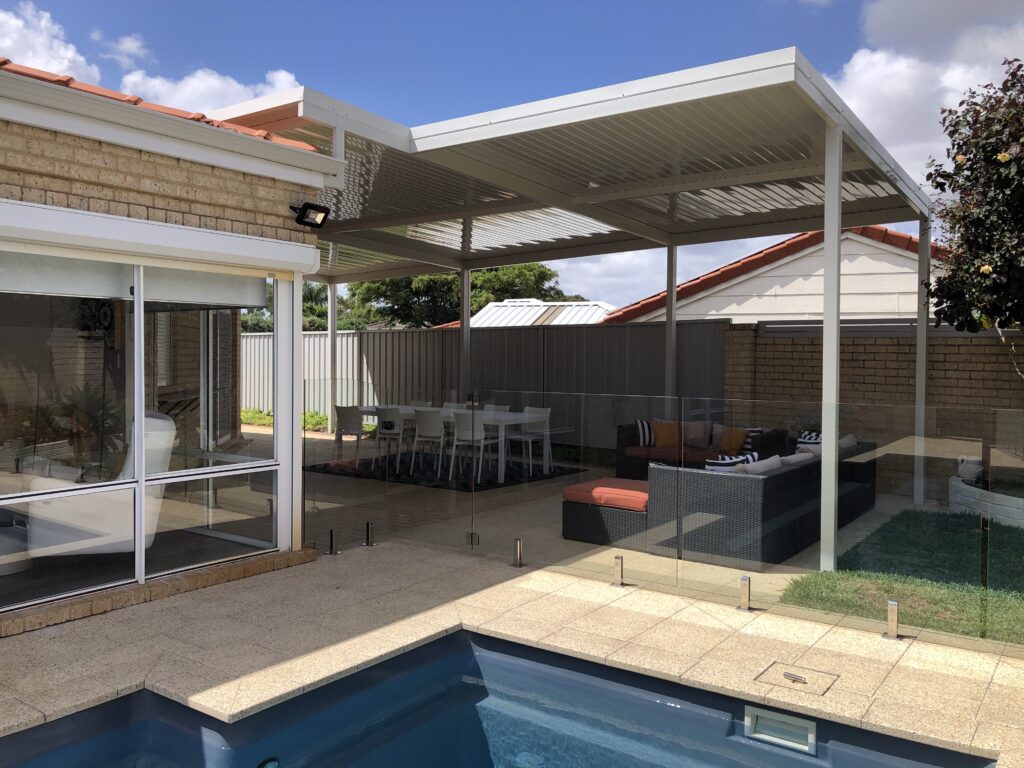
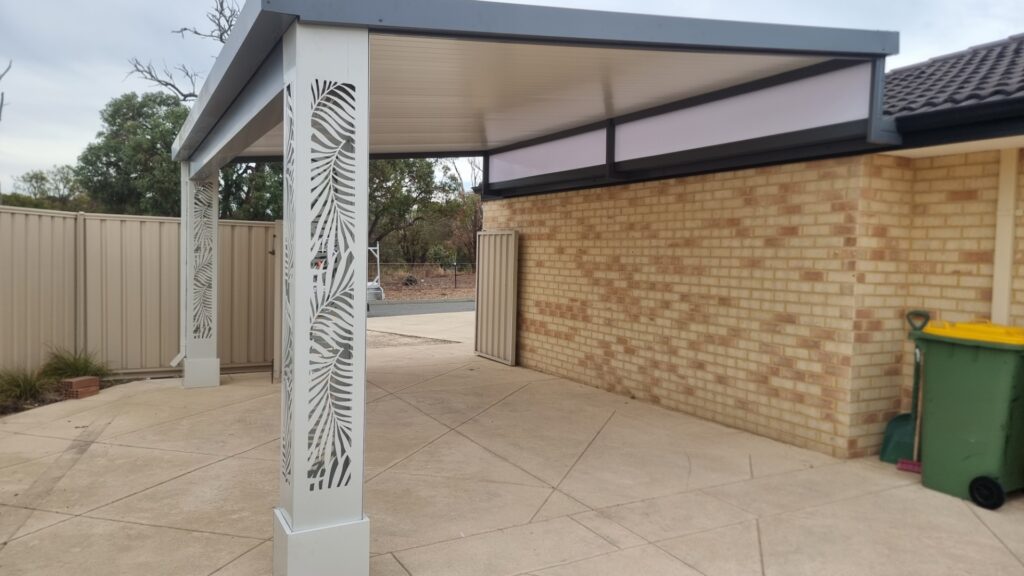
Colorbond is solid steel roofing and the workhorse of Perth patios. It comes in several profiles, and the flat profile known as Flatdek is the one we install most often, giving a neat modern look. Colorbond blocks light completely, performs well across most applications, and sits in the middle of the cost range. It is the default choice for most homeowners who want a clean modern roof without the extra cost of insulated panels.
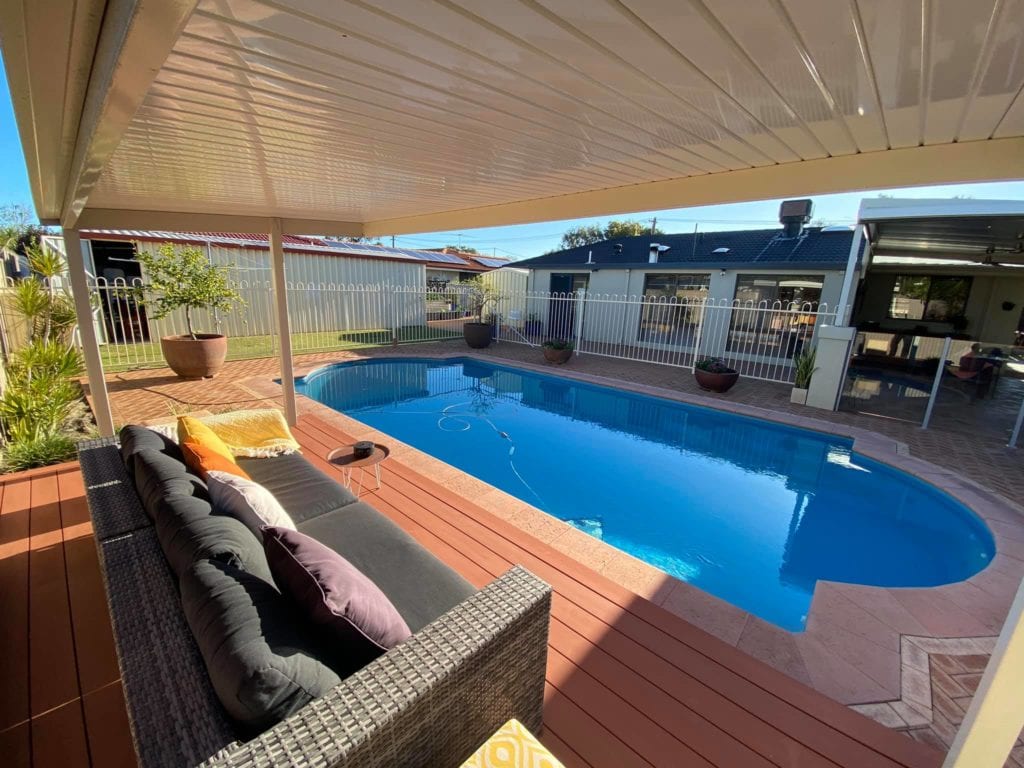
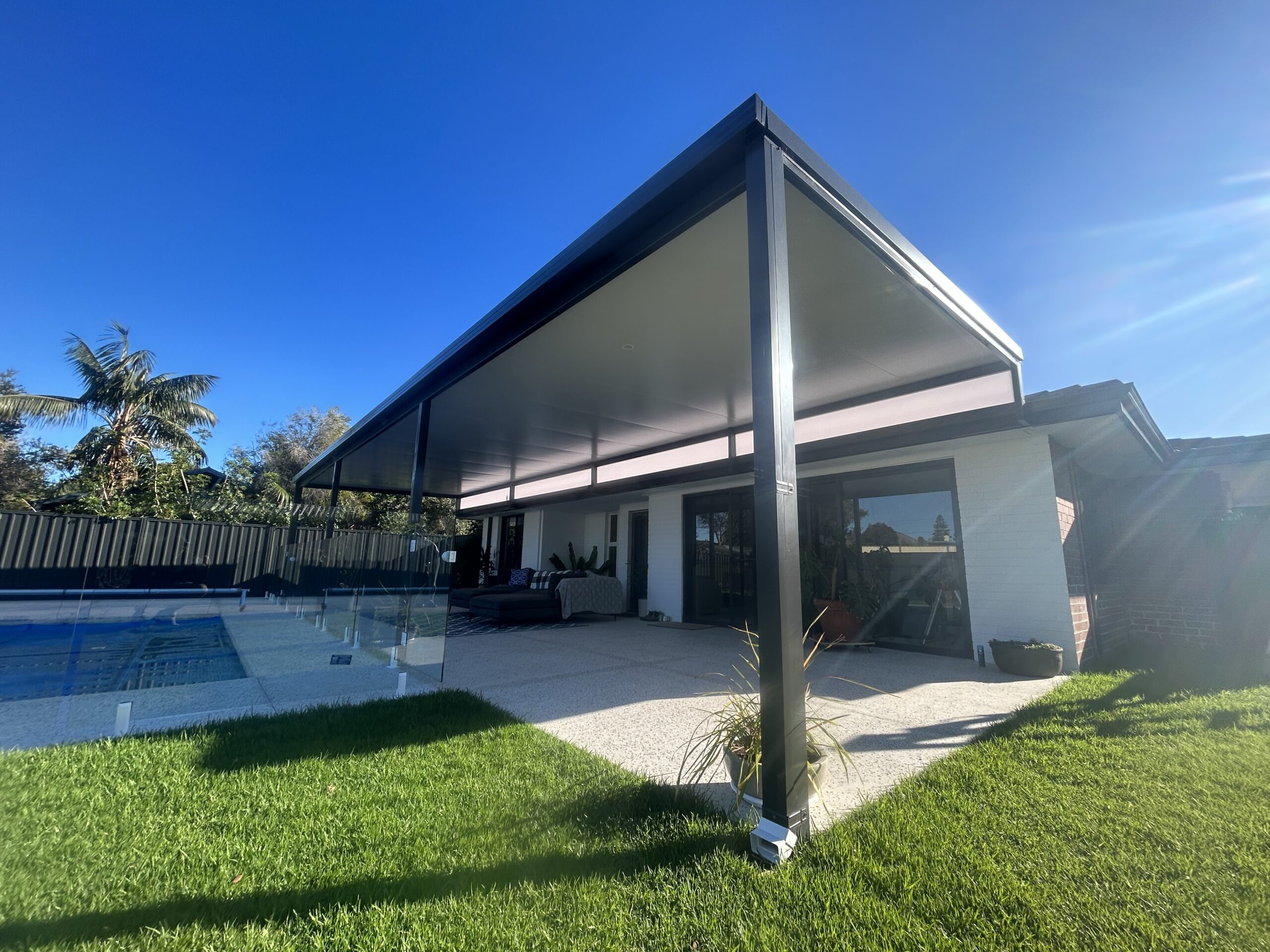
Solarspan is the premium option: an insulated panel system with Colorbond steel on both faces and a solid polystyrene core in between. It blocks heat, reduces rain noise, looks like a finished ceiling from below, and lives longer in Perth conditions than either of the other two. It costs more and earns its keep on every west-facing patio and every space that needs to feel like a room rather than a shelter.
Quick Comparison: Polycarbonate vs Colorbond vs Solarspan
| Feature | Polycarbonate | Colorbond (Flatdek) | Solarspan Insulated |
|---|---|---|---|
| Upfront cost | $ Lowest | $$ Mid-range | $$$ Highest |
| Heat performance | Lets heat through | Blocks sun but radiates warmth | Insulated — stays cool |
| Rain noise | Loud | Moderate | Quietest |
| Light transmission | High (translucent) | None | None |
| Underside finish | Translucent skin | Exposed steel underside | Smooth Colorbond ceiling |
| Lifespan | Shortest (yellows over time) | Long | Longest |
| Best for | Tight budgets, preserving indoor light | Most Perth patios, clean modern look | West-facing patios, outdoor rooms |
Polycarbonate Patio Roofing: Light, Cost, Trade-offs
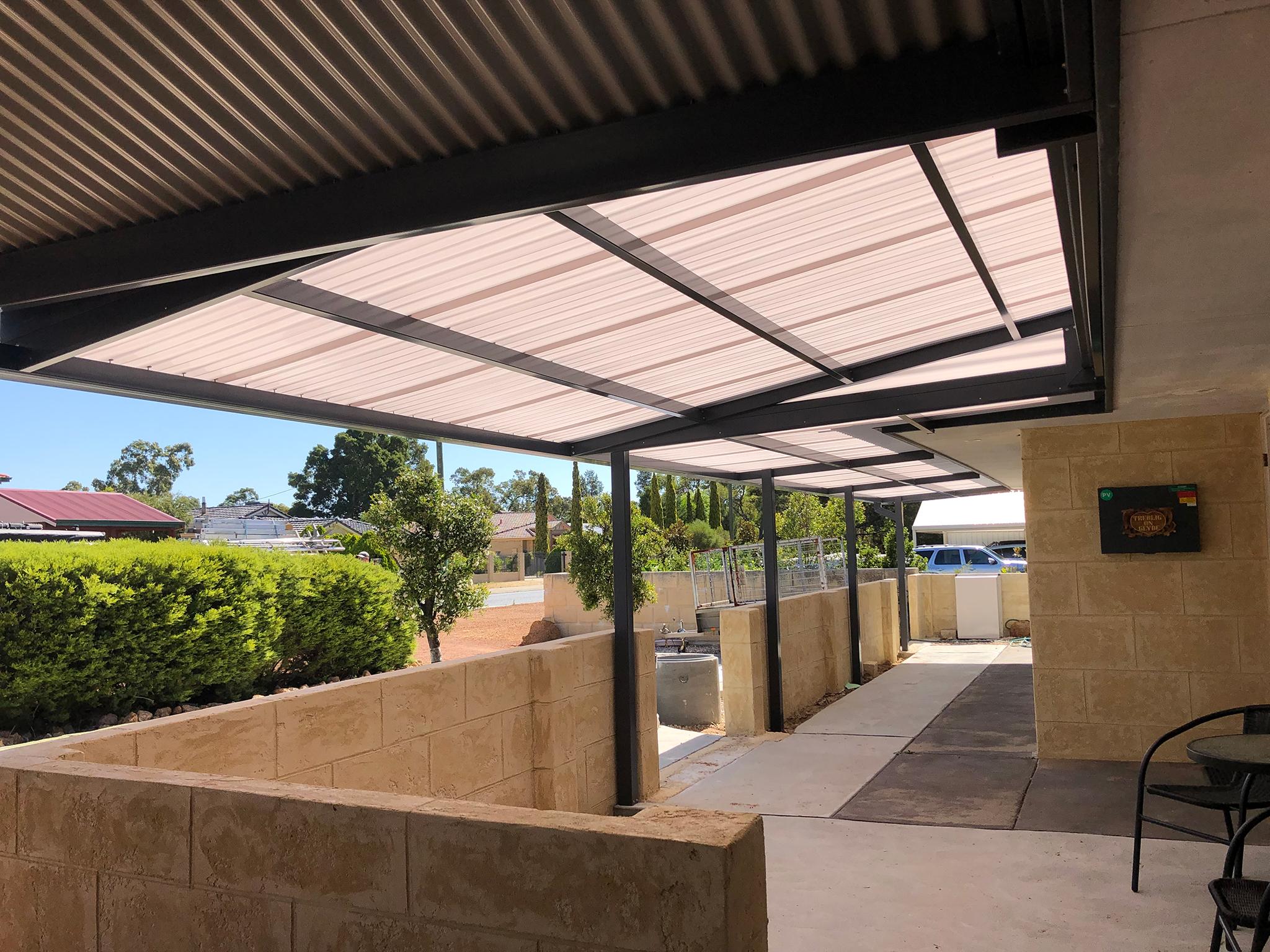
Polycarbonate roofing is the cheapest of the three by a clear margin. It is a translucent sheet, available in tinted variations, and it lets natural light through into the patio and into adjacent indoor rooms. For a covered patio attached to a house with a kitchen or dining room that was previously well-lit, polycarbonate avoids the problem of suddenly darkening the indoor space.
The trade-offs are real and worth understanding before you commit. Polycarbonate does not insulate. Sun heats the sheet and the heat radiates downward. Rain on polycarbonate is genuinely loud, particularly the hard summer Perth storms that come through in March. The material yellows and dulls over time, particularly in coastal positions, and replacement is more frequent than for Colorbond. Polycarbonate is also more vulnerable to hail and falling debris than steel.
It is the right choice when light transmission is the priority and budget is constrained. We use it most often on smaller patios, on patios where the homeowner prefers a more budget-friendly option, and where preserving natural light into a room behind the patio is the deciding factor.
💡 Designer tip: If you love the light polycarbonate gives but worry about the heat, ask us about combining a Colorbond patio with a polycarbonate skylight strip over the section closest to the house. You keep the indoor light without baking the whole patio.
Colorbond Patio Roofing: The Workhorse Option
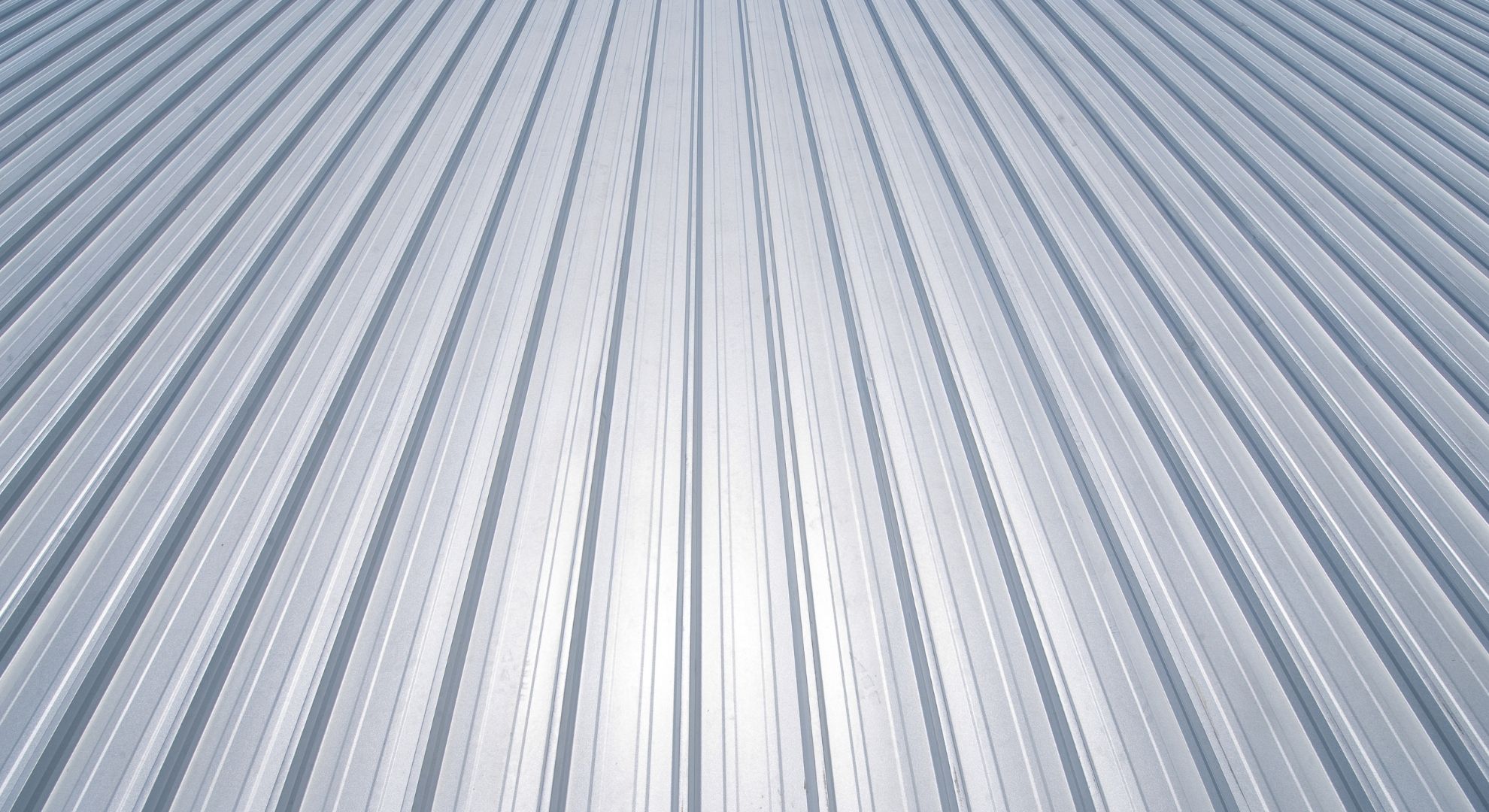
Colorbond steel is solid steel roofing, and it is what we install on most Perth patios. It comes in a few profiles, and the flat ribbed profile known as Flatdek is the one we fit most often. The reasons are practical. It blocks sun completely, it handles Perth’s climate well, it looks clean and modern, the colour holds for decades, and the cost is reasonable.
Colorbond shades the patio space well, but it still warms up in summer afternoon sun and radiates that heat downward without insulation behind it. Rain noise is louder than Solarspan but quieter than polycarbonate. From below, you see the underside of the steel sheets unless a separate ceiling is added, which can be done but adds cost.
It is the right choice when you want a solid roof at a sensible price, the patio sits in shade or has a favourable orientation, and the noise of summer rain is a manageable trade-off. Maintenance is light, mostly gutter cleaning and washing the underside a few times a year. We have a separate guide on how to maintain Flatdek patio roofing in Perth if you want the detail.
Not sure which roof suits your patio?
Twenty years building patios across Perth. We will tell you honestly which option fits your home.
Solarspan Insulated Roofing: What Makes It Different
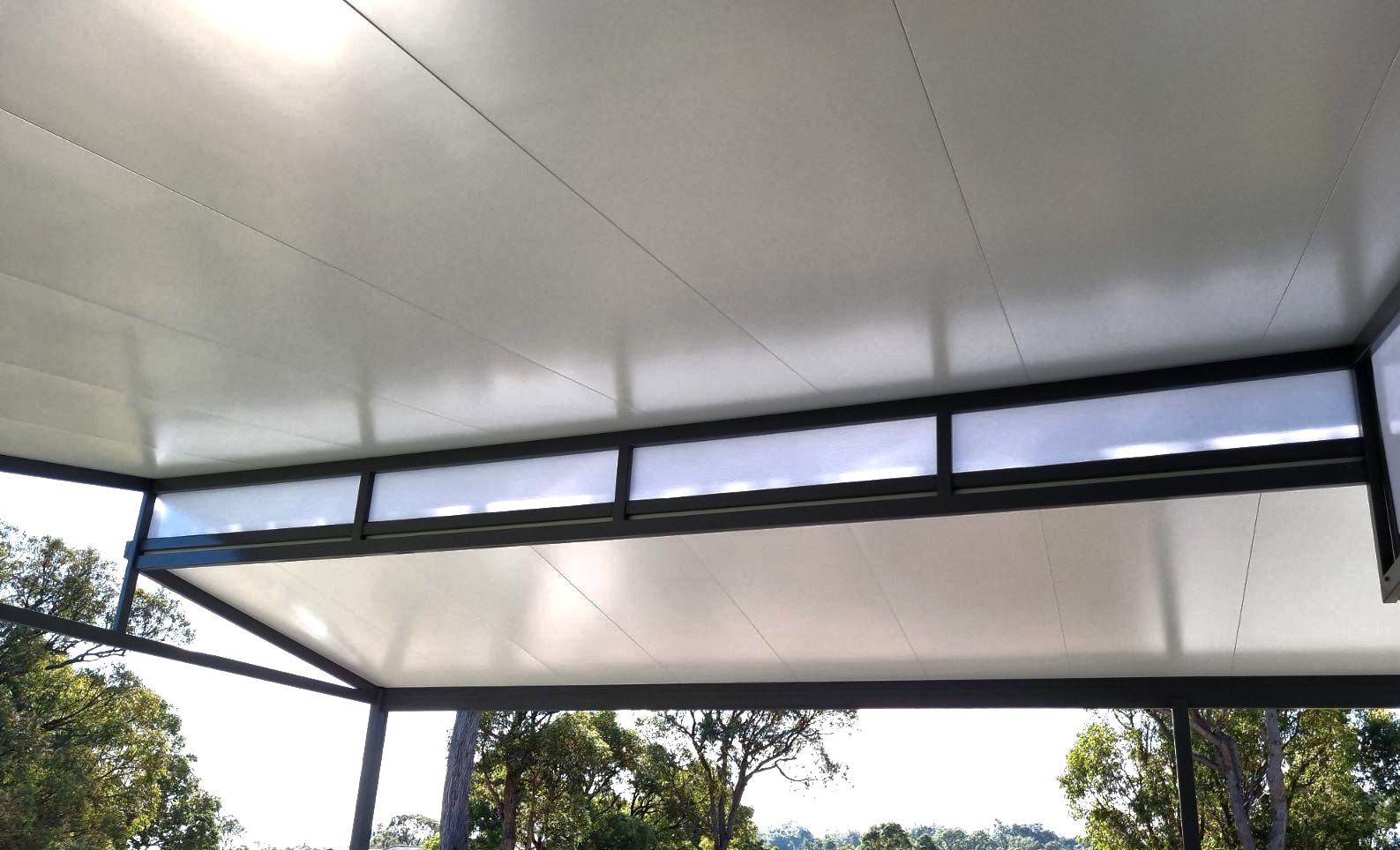
Solarspan is a structural insulated panel. The construction is straightforward: two layers of Colorbond steel bonded to a solid polystyrene core, from fifty millimetres thick. The result is a single panel that does the job of roof, insulation and ceiling at the same time.
That construction changes how the patio behaves in three meaningful ways.
- It blocks radiant heat. The insulated core stops the heat that would otherwise radiate down from a sun-warmed metal roof, so the space underneath stays noticeably cooler on summer afternoons.
- It dampens rain noise. Rain hitting the upper Colorbond is absorbed by the insulated core before any sound reaches the patio, so even heavy storms are significantly quieter than under a single-skin roof.
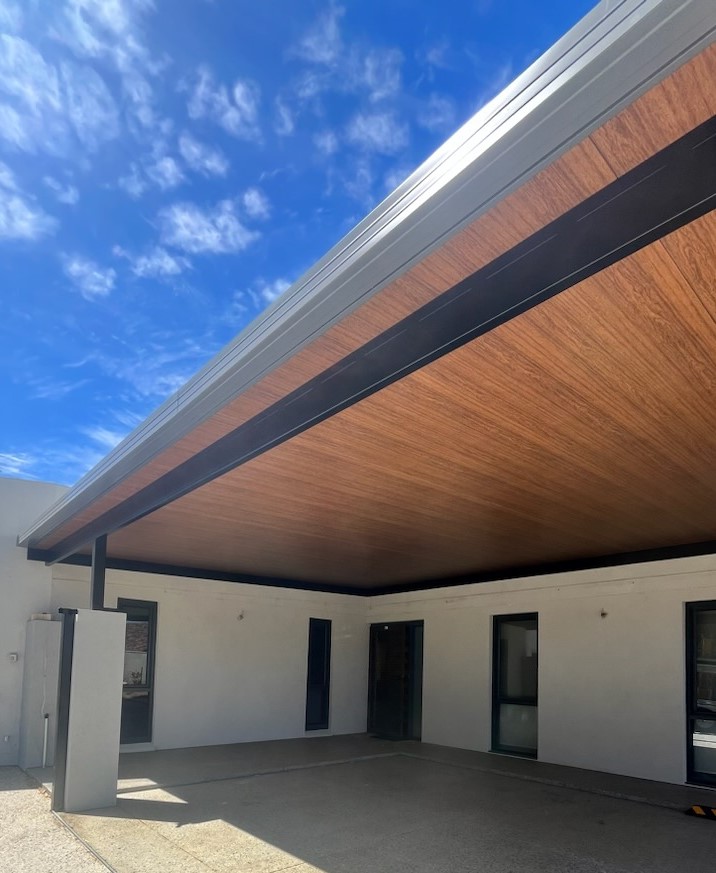
- It looks like a finished ceiling. The underside of Solarspan is a smooth Colorbond surface rather than the underside of corrugated metal. That single detail changes the feel of the patio from a covered outdoor space to something closer to an outdoor room.
Solarspan also spans further than equivalent single-skin sheeting without intermediate beams, which keeps the patio feeling open and uncluttered. It is strong enough to walk on for occasional access, and it does not require painting or resealing over its life. The product is fully Australian-made, which matters for warranty support, for material consistency, and for the supply chain.
We have written separately on the benefits of insulated patio roofing if you want a deeper read on the insulation side of the conversation.
🇦🇺 Australian made. Solarspan is manufactured in Australia using BlueScope Colorbond steel. That means consistent quality, local warranty support, and a supply chain you can rely on when it is time to fit, maintain or extend the patio years down the track.
Heat Through a Perth Summer: How Each Performs
This is the comparison that matters most in Perth. Summer afternoons regularly run thirty-five degrees and the sun beats down for hours. The roof above your head decides whether the patio is usable or whether you retreat indoors.
Polycarbonate lets a significant amount of solar heat through directly. Even tinted polycarbonate transmits enough heat that a west-facing polycarbonate patio is uncomfortable from about two in the afternoon through to evening on hot days. Colorbond blocks the direct solar heat but warms in the sun and radiates that heat downward, particularly in late afternoon when the metal has been heating all day. The patio underneath is shaded but warm. Solarspan blocks the direct heat and the insulated core stops most of the radiant heat from reaching the underside, so the patio stays in genuine shade rather than warm shade. The difference on a thirty-eight degree day under a west-facing patio is the difference between using the space and abandoning it.
On orientations that are already favourable (south-facing, deeply shaded, or naturally cooler), the differences narrow. On west-facing patios and north-west patios that catch summer afternoon sun, the difference is dramatic.
Sound and Rain: The Difference You Notice First
Sit under a polycarbonate roof during a Perth storm and you cannot hold a conversation. The rain hits the thin sheet and the noise is loud and continuous. Sit under Colorbond and the noise is reduced but still pronounced, and a heavy downpour will drown out a television. Sit under Solarspan and the same downpour reads as a soft background rumble, because the polystyrene core absorbs most of the sound before it reaches the patio underneath.
Rain noise sounds like a minor detail until you are entertaining outside during summer thunderstorms or trying to sit with a coffee through a winter shower. Homeowners who have lived under a polycarbonate roof and then upgraded to Solarspan often mention the quiet as the single most surprising improvement.
Aesthetic and Finish from Below
The look of the patio from underneath is decided by the roof you choose. Polycarbonate reads as a translucent skin, which suits some designs and feels unfinished on others. Colorbond looks like the underside of a steel roof, which can be left exposed or hidden behind a separate lined ceiling. Solarspan presents a smooth finished Colorbond surface from below, which gives the patio a ceiling-like feel without the cost of a separate lining.
The finish matters more on patios that connect closely to the indoor living space, where the ceiling line continues from inside to outside and the eye reads the two as one space. Solarspan gives the cleanest transition there. On a more utilitarian patio further from the main living areas, Colorbond with its exposed underside is often perfectly fine and a sensible cost saving.
Cost Versus Long-Term Value
Polycarbonate is the cheapest to supply and install. Colorbond sits in the middle. Solarspan is the most expensive of the three on a like-for-like square metre basis.
The longer-term picture changes the maths. Polycarbonate sheets need replacement on a shorter cycle than Colorbond, which closes some of the upfront gap over fifteen or twenty years. Solarspan does not require a separate ceiling lining if you want a clean finish, while Colorbond does, which closes some of the gap the other way. Add the comfort benefit of insulation across hundreds of summer afternoons over the patio’s life and the value picture becomes clearer than the headline price suggests.
✅ Honest summary: If budget is the deciding factor and the patio orientation forgives a lot, polycarbonate or Colorbond will serve you well. If the patio is a major investment in your home and you want it to feel like a year-round room, Solarspan repays the extra spend through the life of the structure.
Which Roof for Which Application?
There is no single right answer. There is a right answer for your patio. The shortcut decision tree we walk through with clients sounds like this.
|
☀
Pick Polycarbonate when…
Entry-level covered outdoor area. |
🛡
Pick Colorbond when…
The Flatdek profile is the popular pick. |
❄
Pick Solarspan when…
Pair with outdoor blinds for a year-round outdoor room. |
Frequently Asked Questions
Which patio roof is best for a west-facing Perth patio?
Solarspan is the clear pick for west-facing patios in Perth. The insulated core stops the late-afternoon radiant heat that makes Colorbond or polycarbonate patios uncomfortable in summer. If budget is fixed, Colorbond Flatdek is a workable middle ground, but expect a warmer space from about 2pm onwards on hot days.
How much louder is rain on polycarbonate vs Colorbond vs Solarspan?
The difference is significant. Polycarbonate is loud enough that conversation under it during a storm is difficult. Colorbond is meaningfully quieter than polycarbonate but a heavy downpour will still drown out normal television volume. Solarspan reads as a soft background rumble because the polystyrene core absorbs most of the sound before it reaches the patio underneath.
Is Flatdek the same as Colorbond?
Flatdek is one of the profiles available in Colorbond steel. It is the flat ribbed profile most Perth homeowners associate with a modern patio look. When we say “Colorbond Flatdek” we mean Colorbond steel formed into the Flatdek profile.
Does Solarspan need a separate ceiling lining?
No. The underside of Solarspan is a finished Colorbond surface, so it already looks like a smooth ceiling. That is part of why Solarspan compares better than the raw cost number suggests once you factor in what Colorbond would cost to line.
How long does each roof material last in Perth conditions?
Solarspan has the longest lifespan and the steel surfaces hold colour for decades. Colorbond is also long-lived with light maintenance. Polycarbonate has the shortest life of the three and tends to yellow and dull over time, particularly in coastal positions, with replacement needed on a shorter cycle.
Can I mix materials on one patio?
Yes, and it is sometimes the smartest choice. A common configuration is a Colorbond patio with a polycarbonate strip running over the section closest to the house, so the indoor rooms keep their natural light while the main patio stays cool and shaded. Ask us about it on the onsite measure.
Do you handle council approvals?
The homeowner is the council applicant, but we have walked thousands of Perth jobs through the approval process and we are happy to guide you through the paperwork. Most Perth patios are installed 8 to 10 weeks after council approval is granted.
Working with One Stop Patio Shop
If you are deciding between roof materials for a Perth patio, we would be glad to walk through the options with you on site. After more than twenty years building patios across the Perth metro area, we have installed every combination of these materials in every orientation, and we will tell you honestly which one suits your project rather than pushing the most expensive option by default. We are tradesmen first, not salesmen.
To see the patio designs the three roof materials sit under, browse our patio designs range, or read more about each material on the dedicated Solarspan and Colorbond pages.
Ready for a free onsite quote?
No obligation. We measure on site and give you a formal quote on the same day.
🕒 Mon–Fri 8am–4:30pm